
 High Temperature Cables
🔥
SPECIALITY CABLES • TECHNICAL CATEGORY
High Temperature Silicone & Heat-Resistant Cables
Silicone Insulated Single Core & Multicore Cables Rated up to +180°C Continuous Duty
ENGINEERING OVERVIEW
Technical Architecture & Procurement Specifications
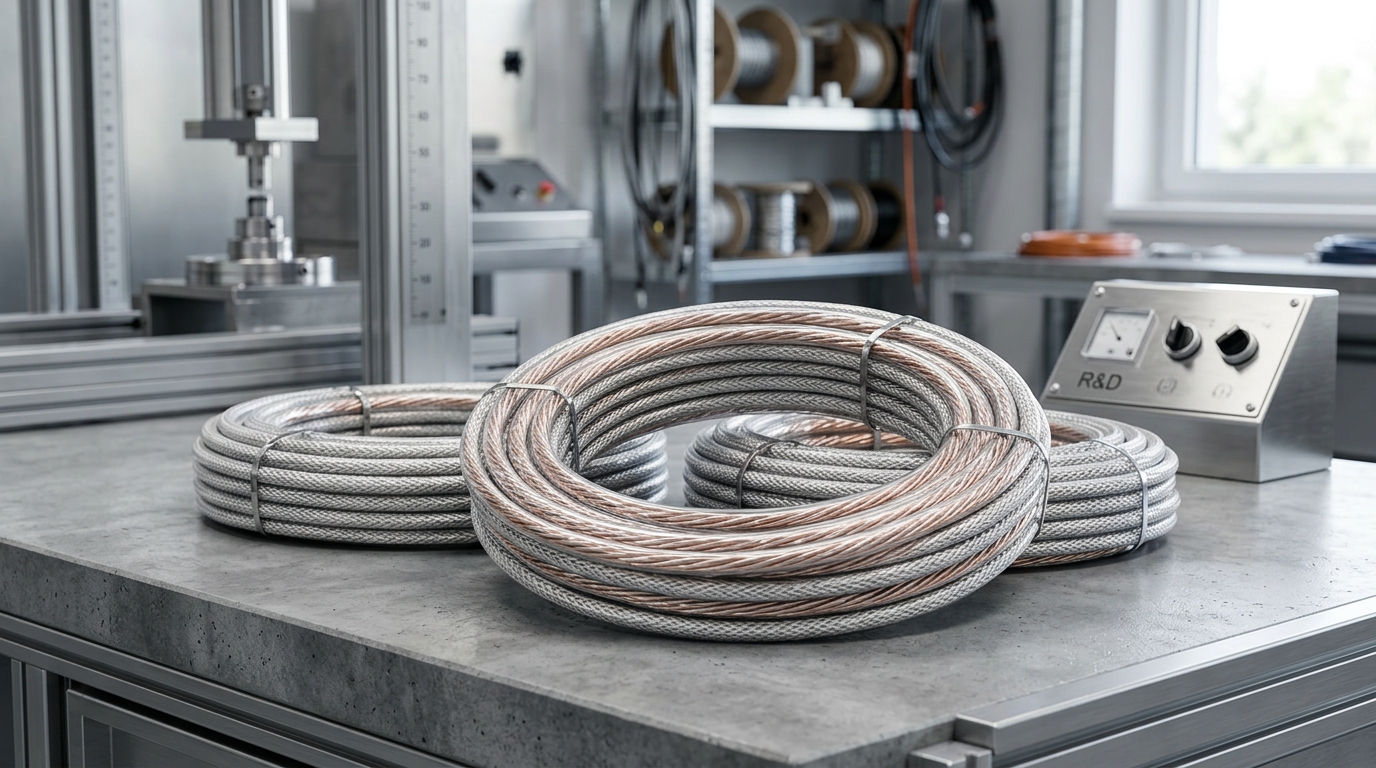
Peraton high-temperature cables are specifically formulated to maintain continuous electrical integrity in thermal environments where standard thermoplastic insulations melt, embrittle, or decompose. Using cross-linked silicone rubber dielectrics and tinned or silver-plated copper conductors, these cables deliver continuous operation across extreme temperature boundaries from -60°C up to +180°C (with intermittent ratings up to +200°C).
Extensively deployed in metallurgical steel plants, glassworks, industrial furnaces, commercial ovens, kiln burners, boiler plants, and lighting fixtures, Peraton silicone cables combine exceptional thermal resilience with flexibility and resistance to ozone and UV radiation. Where mechanical abrasion or tensile pull is present, high-temperature glass-fibre braided overjackets are applied for enhanced physical protection. Formulated with high-grade silicone polymers, each heat-resistant cable undergoes elevated-temperature dielectric testing and thermal aging verification to ensure dependable continuous performance without insulation embrittlement. Peraton works closely with electrical consultants, EPC contractors, and OEM panel builders across India, providing complete Guaranteed Technical Particulars (GTP), custom length reeling, and responsive technical procurement support for tender submissions.
PRODUCTS IN THIS CATEGORY
Engineered Cables & Wires (1)
Each cable product is manufactured with defined conductor stranding, controlled insulation compounds, and standard quality testing.
High Temperature Cables
TECHNICAL ADVISORY
Frequently Asked Questions: High Temperature Cables
What is the maximum continuous temperature rating of Peraton silicone cables?
Peraton silicone rubber insulated cables operate continuously from -60°C up to +180°C, with short-term thermal excursions up to +200°C.
Why is tinned copper used in high-temperature cables instead of bare copper?
At temperatures above 100°C, bare copper oxidizes rapidly, forming non-conductive copper oxide that degrades electrical connections. Tin plating forms a protective barrier, preventing thermal oxidation and maintaining low contact resistance.
What mechanical protection is available for silicone cables?
Because silicone rubber has lower mechanical tear resistance than PVC, Peraton supplies silicone cables with protective outer glass-yarn braids impregnated with heat-resistant silicone varnish for superior abrasion resistance.
RELATED IN SPECIALITY CABLES
Explore Other Speciality Cables Categories
✈️
Uninyvin Cables →
Airframe, military, and aerospace braided speciality cables
🧶
Braided Cables →
Nylon and glass-fibre protective braided constructions
🏗️
Rubber & Heavy Duty Cables →
Tough elastomeric sheath rubber and welding cables
🛡️
Fire Performance Cables →
Circuit integrity fire resistant and fire survival cables
📐
Custom Engineered Cables →
Application-specific cables built to customer proprietary specifications